Good packaging does more than hold a pet product. It protects the product, communicates value, supports store operations, and shapes the buyer’s first impression of your brand.
For pet brands, retailers, importers, and e-commerce sellers, the best time to solve packaging problems is before mass production. A small correction to a dieline or label during sampling is manageable. Reworking thousands of finished packages is expensive.
Use this retail-ready pet product packaging checklist to review your packaging with your manufacturer before approving production.
1. Confirm the Retail Channel
Start by defining where the product will be sold. A hanging dog toy in a pet store has different packaging needs from a slow feeder shipped through an online marketplace.
Ask:
- Will the product hang on a peg, sit on a shelf, or stand in a display box?
- Does the retailer specify a maximum package size or weight?
- Will the package be handled individually or packed in a shelf-ready display?
- Does an e-commerce platform require additional labels or barcode placement?
- Must the customer see or touch part of the product before buying?
The sales channel affects almost every packaging decision, including material, dimensions, closure method, artwork, and carton configuration.
2. Choose a Packaging Structure That Fits the Product
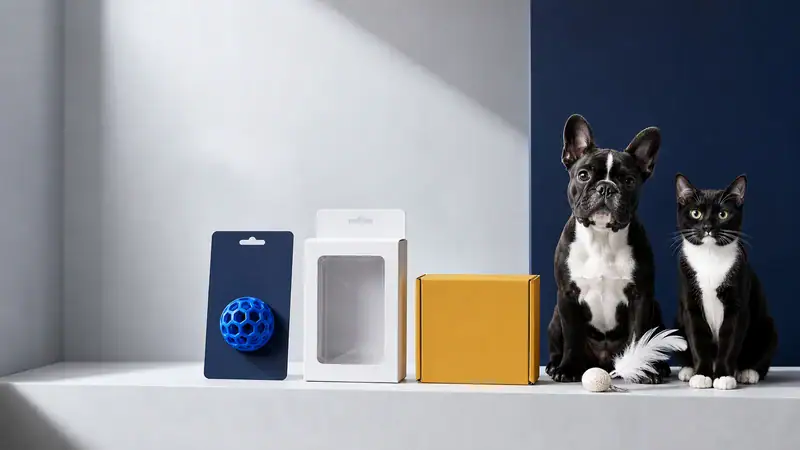
Common options for pet products include header cards, backer cards, belly bands, color boxes, window boxes, polybags, kraft boxes, blister packs, and display cartons.
The right choice should:
- Hold the product securely without crushing or deforming it
- Protect printed, polished, fabric, rope, or molded surfaces
- Prevent loose components from moving or escaping
- Make the product easy to identify
- Fit the intended display system
- Avoid unnecessary empty space
- Be practical for packing at production scale
A premium box may add perceived value, but it also adds material, assembly time, shipping volume, and cost. The most effective packaging balances presentation with protection and operational efficiency.
If you need help comparing structures, materials, and branded formats, review HEOU’s packaging customization options.
Need retail-ready packaging for a new pet product? Contact HEOU to discuss your product, target market, packaging format, and private-label requirements.
3. Check Product-to-Package Fit
Never approve packaging from artwork alone. Test the physical product inside a production-representative package.
Check for:
- Excessive movement during handling
- Pressure points that may mark or deform the product
- Sharp product features that may puncture the package
- Rope ends, tags, or accessories that can become trapped
- A window that shifts away from the product
- A hang hole that tears under the product’s weight
- Closures that open too easily or damage the product
For soft products, consider whether compression will affect their shape after unpacking. For rubber, TPR, TPE, or plastic products, check whether prolonged contact with printed surfaces or packaging materials could cause transfer, odor, or appearance issues.
4. Verify Required On-Pack Information
Packaging requirements vary by product type, target market, retailer, and sales channel. Your brand should confirm the applicable legal and customer requirements with qualified compliance specialists before printing.
Depending on the product and destination, your information panel may need:
- Product name and intended use
- Material information
- Size, quantity, or net contents
- Country of origin
- Manufacturer, importer, or responsible business details
- Batch, lot, or traceability code
- Care, cleaning, and storage instructions
- Age, pet size, or supervised-use guidance
- Warnings relevant to the product
- Disposal or recycling information
- Required marks, symbols, or translations
Do not copy warnings from an unrelated competitor. Instructions and warnings should reflect the actual product design, materials, use pattern, and target market.

5. Review Barcodes and Variable Data
A barcode that looks correct on screen can still fail at receiving or checkout.
Before production:
- Confirm the correct barcode type and number
- Use the final printed size, contrast, and quiet zone
- Keep the code away from folds, edges, curves, seams, and glossy glare where possible
- Scan a printed proof and a finished package
- Confirm SKU, color, size, and quantity match the enclosed product
- Reserve space for retailer or marketplace labels if required
If you have multiple variants, create a controlled SKU table so that artwork, product color, inner pack, master carton, and barcode remain aligned.
6. Inspect Brand and Artwork Accuracy
Packaging often passes through several teams: design, sourcing, sales, compliance, printing, and production. Version control is essential.
Review:
- Logo proportions, colors, and clear space
- Product name and variant
- Claims and benefit statements
- Spelling, punctuation, and translations
- Product photography or illustrations
- Color references and print tolerances
- Dieline layers, bleed, folds, glue areas, and cut lines
- Legibility at actual printed size
- The approved artwork revision number
Claims such as “indestructible,” “non-toxic,” “eco-friendly,” or “recyclable” should only be used when they are accurate, supportable, and suitable for the target market.
7. Test Display Performance
Retail packaging must work after it reaches the shelf—not only when it leaves the factory.
Create a small display simulation and ask:
- Does the package face forward?
- Can it stand or hang without leaning?
- Is the brand visible from a normal shopping distance?
- Can the customer understand the product in a few seconds?
- Are key features blocked by stickers, fixtures, or neighboring products?
- Can store staff replenish it easily?
For peg-hung products, test the hang tab or euro slot using the actual packaged weight. For boxed products, test stacking stability and shelf orientation.
8. Validate E-Commerce and Shipping Protection
Retail-ready does not automatically mean ship-ready. A color box designed for a store shelf may need additional protection for parcel delivery.
Run handling tests appropriate to the distribution route. Review:
- Scuffing and crushing
- Seal strength
- Product movement
- Moisture exposure
- Label adhesion
- Drop and vibration risks
- Whether the retail package needs an outer mailer
The master carton also matters. Confirm carton dimensions, gross weight, product quantity, shipping marks, carton strength, and pallet pattern before mass production.
9. Consider Sustainability Practically
Sustainable packaging begins with reducing unnecessary material and shipping volume. It is not limited to changing paper color or adding an environmental icon.
Possible improvements include:
- Right-sizing the package
- Reducing mixed materials
- Removing unnecessary plastic windows
- Using recycled-content material where suitable
- Designing components for easier separation
- Printing clear disposal instructions
- Improving carton utilization
Make sure sustainability language matches the actual packaging specification and the recycling infrastructure in the target market.
10. Approve a Golden Packaging Sample
Before mass production, approve a physical reference sample that includes:
- The correct product
- Final packaging material and structure
- Approved print colors and finishes
- Correct barcode and variable data
- All accessories, inserts, ties, and labels
- The intended packing method
Sign and date the approved sample, record its revision, and keep matching references with both the buyer and manufacturer. This “golden sample” becomes the standard for incoming inspection and production quality control.
Final Pre-Production Checklist
Before releasing your packaging order, confirm:
- [ ] Sales channel and retailer requirements are documented
- [ ] Package structure fits and protects the product
- [ ] Final dimensions and weight are approved
- [ ] Display and hang performance are tested
- [ ] Required information and warnings are reviewed
- [ ] Barcode scans successfully
- [ ] Artwork, color, and claims are approved
- [ ] E-commerce shipping protection is validated
- [ ] Inner pack and master carton details are confirmed
- [ ] A signed golden sample is available
Good packaging protects more than the product. It protects your launch schedule, retailer relationships, customer experience, and brand reputation.