“Waterproof” is too vague for an electronic pet product specification. A water fountain may experience continuous splashing around its reservoir, while an automatic feeder may only need protection during wipe cleaning. An electronic toy may contact saliva, wet floors or light rain. These situations require different enclosure designs and different claims.
Buyers should define the exposure scenario, identify the exact enclosure that needs protection and validate the finished production-equivalent product. An IP rating should be treated as a technical classification for a specific configuration—not as a general marketing synonym for durability.
What an IP rating means
An IP code describes a defined level of protection provided by an enclosure against the ingress of solid objects and water under specified test conditions. The first numeral relates to solid-object protection; the second relates to water protection.
When an X appears, that characteristic has not been assigned in the stated code. For example, IPX4 communicates a defined level of protection against splashing water, but it does not communicate a dust-protection rating.
An IP code applies to the enclosure and configuration that were evaluated. It does not automatically cover another model, an altered charging port, a changed gasket or a revised assembly process.
Why IPX4 does not mean fully waterproof
IPX4 is commonly discussed for products exposed to splashes. It does not establish suitability for immersion, pressure washing, dishwasher cleaning or unrestricted outdoor use. Higher water numerals also represent specific test conditions; they should not be interpreted casually as permission for every type of water exposure.
Marketing language should match the supported use. “Water-resistant powered base under normal splashing” may be more accurate than “waterproof fountain.” User instructions should explain what owners can wash, what must be wiped and what must never be immersed.
Define the real exposure scenario
Before selecting a target rating, map how the product will be used and cleaned.
Pet water fountains
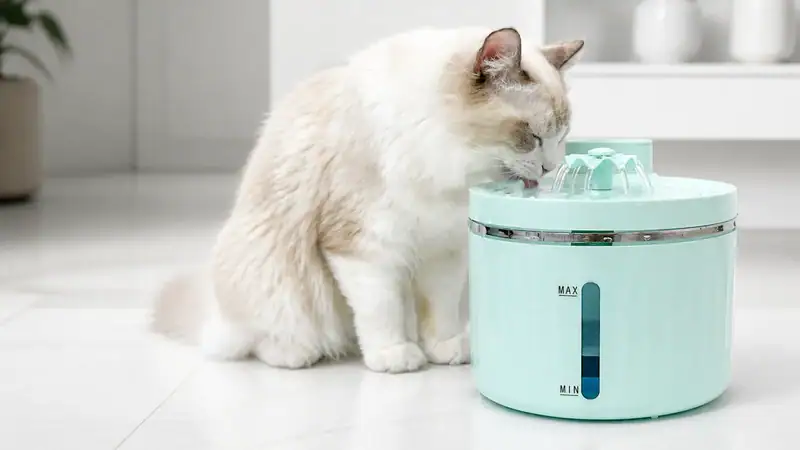
A smart pet water fountain may experience splashing, spilled water during refilling, wet hands and residual water after disassembly. The removable reservoir, drinking tray and powered base may require different treatment. Buyers should identify whether the pump, connector and control housing are separate components and how users access them for cleaning.
Automatic feeders
A smart feeder may encounter damp wiping, accidental bowl spills or wet food near a removable tray. A dry-food hopper does not necessarily require the same enclosure protection as the control panel or charging port. The product should clearly separate washable parts from electronics.
Electronic pet toys
Smart electronic dog toys and electronic cat toys may contact saliva, damp floors or outdoor moisture. Movement can also place stress on seams and port covers. If outdoor use is planned, exposure to rain, dirt and temperature should be defined rather than implied.
Grooming and cleaning devices
Spray brushes and powered grooming tools can be used near water. The brief should distinguish intentional water handling from accidental splash exposure and should define charging restrictions.
Enclosure features that influence water resistance
Ingress protection depends on the entire path water may take. Important design areas include:
- Housing seams and screw locations
- Gaskets and compression
- Buttons and display windows
- Charging-port covers
- Cable entry points
- Battery compartments
- Speaker or ventilation openings
- Pump and connector interfaces
- Drainage channels
- Assembly tolerances
A strong gasket cannot compensate for poor compression or an unsealed port. A port cover may pass initial testing but become less reliable after repeated opening. If a seal is installed manually, production consistency and inspection methods matter.
Design should also consider trapped water. Drainage can sometimes be safer than attempting to seal a noncritical outer cavity completely.
How to write a useful RFQ
A target IP code without a use case may lead to overengineering or misunderstanding. Include a written scenario such as:
“The powered base may experience normal bowl splashing and damp-cloth cleaning. It will not be immersed. The removable reservoir and top tray must be washable separately.”
Also provide:
- Product category and intended location
- Indoor or outdoor use
- Power and charging method
- Expected water and saliva exposure
- Cleaning instructions planned for consumers
- Target IP code, if already determined
- Destination markets
- Required test evidence
- Forecast volume and target price
This allows the manufacturer to evaluate housing, seals, assembly and cost as a system.
Testing the production-equivalent configuration
Testing should use a unit that reflects final housing, gaskets, ports, fasteners and assembly. A prototype with hand-applied sealant may not represent mass production. Similarly, evidence from an earlier model may not remain relevant after a design change. Record the tested configuration using a structured pre-production sample evaluation.
After exposure testing, assess both water entry and function. An electronic product may continue operating initially but develop corrosion or intermittent performance later. Depending on product risk, post-exposure inspection and functional checks can be important.
Production controls may include gasket inspection, torque control, leak checks or sampling tests. The appropriate method depends on the product architecture and required claim.
Changes that can affect an existing rating
Seemingly small changes can alter ingress performance:
- A different charging connector
- A new button or display
- A revised housing material
- Gasket supplier or hardness changes
- New screw torque
- A logo plate added across a seam
- Ventilation changes
- Cable-routing changes
- Mold wear or dimensional variation
Use change control. When one of these elements changes, review whether the existing test evidence still applies.
Water resistance, food contact and user cleaning
For fountains and feeders, water resistance must be coordinated with food-contact design. The easiest product to explain is often one with clearly removable washable parts and a powered base that is protected only for its realistic exposure.
Packaging, manuals and product-page copy should use the same terminology. If the manual says “do not immerse,” an e-commerce listing should not headline the entire product as waterproof.
Buyers planning removable bowls and reservoirs can compare conventional pet water fountains with powered smart models. Cleaning limitations and water-resistance wording should also be coordinated with the pet-product packaging checklist before artwork approval.
Design the Water Exposure Before You Design the Claim
Clear use conditions help prevent overpromising, unnecessary cost and avoidable returns. Contact HEOU with your exposure scenario, power configuration, cleaning plan, target market and forecast quantity. Our OEM/ODM team can discuss enclosure and component options before sampling.
Frequently asked questions
Is IPX4 waterproof?
No. It indicates a defined level of protection against splashing water under test conditions. It does not mean the product can be immersed or washed in a dishwasher.
Can the whole water fountain be washed?
That depends on the model. Buyers should distinguish removable water-contact components from the powered base and provide product-specific cleaning instructions.
Can a rating be reused after changing the housing?
Not automatically. Changes to seams, gaskets, ports, buttons, materials or assembly can affect the relevance of existing evidence.