
Food-grade is not a complete purchasing specification for a pet bowl or feeder. A finished product may contain a bowl body, removable insert, lid, gasket, hopper, dispensing wheel, water tube, coating and powered base. Each component has a different function and may experience different food, water, temperature and cleaning conditions.
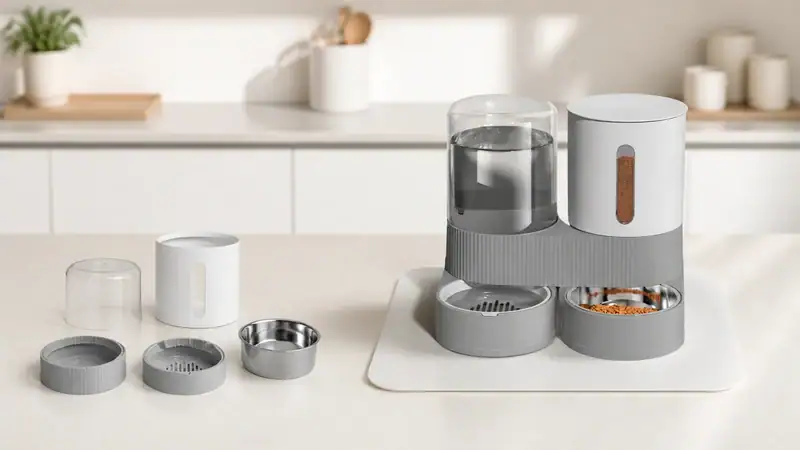
For pet brands, importers and retailers, good food-contact material planning begins with a component map and an intended-use statement. The goal is to select practical materials, design cleanable geometry and obtain documentation appropriate to the exact product and destination market.
Identify every food- and water-contact component
Start by marking all surfaces that may contact kibble, wet food, treats or drinking water during normal use. Do not evaluate only the most visible bowl.
A gravity feeder may include a hopper, lid, outlet and bowl. An automatic feeder may add a dispensing rotor, internal chute, seals and removable tray. A pet water fountain may include a reservoir, top tray, pump-adjacent parts, tube, filter holder and spout. Coatings, adhesives and printed areas should also be considered if contact is reasonably foreseeable.
This component-level map helps the buyer and manufacturer build a bill of materials, identify removable parts and decide which sections must be washable.
Match materials to actual use conditions
Common pet bowl and feeder constructions use stainless steel, polypropylene and other plastics, silicone components or combinations of these materials. The correct option depends on use rather than the material name alone.
Important questions include:
- Will the product hold dry kibble, wet food, oily treats or water?
- What is the expected contact duration?
- Will owners use hot water, a dishwasher, a microwave or a freezer?
- Is the component likely to be scratched by utensils or repeated cleaning?
- Must the part be transparent?
- Does it need flexibility, sealing or anti-slip performance?
- Is it removable from any electronic base?
A material suitable for a dry-food hopper is not automatically the right choice for a flexible seal or water path. The product brief should define each use condition clearly.
Design for cleaning, not only compliance
Appropriate material selection does not compensate for poor geometry. Deep crevices, inaccessible joints, sharp internal corners and non-removable assemblies can collect residue. That can lead to odor, customer complaints and poor reviews even if individual materials were properly specified.
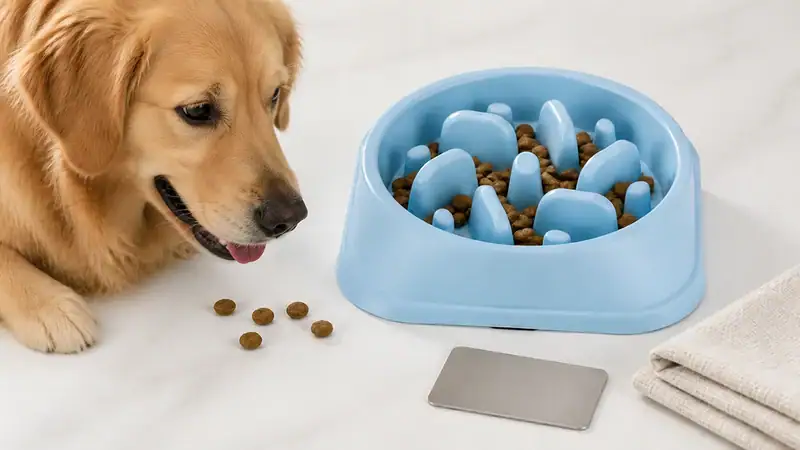
Slow feeders require a careful balance. The maze should slow eating without creating narrow channels that are difficult to reach during washing. Bowl edges should be smooth and accessible. Automatic feeders should allow owners to remove food-contact parts without exposing electrical areas or making reassembly confusing.
For fountains, consider drainage and trapped water. Identify where water remains after the reservoir is emptied. A practical design should allow routine cleaning according to clear user instructions.
Be precise about cleaning claims
“Dishwasher-safe feeder” can be misleading if only the removable bowl can enter a dishwasher. Claims should name the component and any limitations. The same principle applies to microwave, freezer, hot-water and sterilization statements.
For electronic products, distinguish the washable food-contact assembly from the powered base. Packaging and manuals should make the separation easy to understand. If a cleaning statement is important to the retail proposition, include it in the engineering brief so it can be evaluated during sampling.
Documentation buyers should request
Documentation requirements vary by destination market, product construction, retailer and intended claim. Buyers should confirm the applicable route with a qualified compliance adviser or laboratory.
A useful supplier package may include:
- A component-level bill of materials
- Material identification for contact parts
- Supplier declarations where applicable
- Test reports relevant to the exact material and conditions
- Traceable sample or batch information
- Records of approved changes
- Finished-product instructions and claim wording
A report is useful only when its scope matches the product. Evidence from another SKU may not apply after a change in resin, pigment, coating, seal, adhesive, supplier or use condition. Brands should maintain change control so documentation is reviewed when relevant components are modified.
Avoid unsupported blanket claims
Terms such as “food-grade,” “BPA-free,” “non-toxic” or “safe” can be too broad when used without context. The final wording should have a defined meaning and support appropriate to the product and market.
A better development process begins with the desired claim, identifies the components and conditions it covers, and then determines what evidence is needed. Packaging artwork should not be finalized before this review is complete.
Sampling checks for bowls and feeders
A functional sample should be evaluated as a complete user experience. Buyers can check:
- Actual capacity and portion behavior
- Stability and anti-slip performance
- Food release from hoppers or rotors
- Residue in corners and joints
- Ease of disassembly and reassembly
- Drainage after washing
- Odor and visual change after expected cleaning
- Scratching and logo durability
- Separation of washable parts from powered areas
- Clarity of instructions
For connected or programmed models in the smart feeder category, also assess whether kibble size affects dispensing, whether food can bridge in the hopper and whether seals or lids support the intended storage function. These are product-performance questions alongside material considerations.
Stainless steel, plastics and silicone in multi-material products
Stainless-steel inserts can provide a familiar eating surface and a premium visual cue. The grade, finish, edge construction and attachment method should be specified. A removable insert may also simplify cleaning.
Plastic components offer design freedom, color and efficient molding. Resin choice should reflect contact conditions, mechanical requirements and target market. Surface texture must support cleaning.
Silicone is often used for seals, mats, collapsible elements and anti-slip features. Hardness, odor, color and attachment method need approval. If the silicone component is removable, instructions should explain correct positioning and cleaning.
Multi-material assemblies should be reviewed together because the weakest component or most difficult joint can determine the overall user experience.
What to send in your RFQ
Provide the product drawing or reference, target animal and portion size, contact foods, temperature and cleaning conditions, destination countries, desired claims, preferred materials, capacity, anti-slip requirement, electronics information, packaging concept and forecast order volume.
If you do not know the appropriate material, describe the use conditions rather than guessing. That gives the manufacturer a stronger basis for proposing a construction.
For category-specific construction references, compare standard pet bowls with portable travel bowls and bottles. For development stages from concept through mass production, read the pet product development guide.
Build a Feeder Specification Buyers Can Trust
Material, design, cleaning and documentation should work as one system. Contact HEOU with your target market, contact conditions, product drawing and claim list. Our OEM/ODM team can help review the manufacturability of a custom bowl, slow feeder, fountain or automatic feeder before sampling.
Frequently asked questions
Can a supplier simply call a pet bowl food-grade?
A label alone is not evidence. Define the exact material, contact condition, intended use and destination market, then request documentation appropriate to that product.
Does dishwasher-safe apply to the whole automatic feeder?
Not necessarily. It may apply only to a removable bowl, tray, hopper or reservoir. The claim and instructions should distinguish washable components from the powered base.
Should every color be tested separately?
A pigment or formulation change can affect the relevance of existing evidence. Confirm the testing and documentation strategy for each approved material and color with qualified compliance support.