TPR, natural rubber and silicone can all be suitable for pet toys, but they are not interchangeable. Each material offers a different combination of feel, processing method, color flexibility, resilience, cleaning performance and cost. The best choice depends on the finished toy’s function, geometry, target pet, price position and intended marketing claims.
For B2B buyers, material selection should begin before tooling. Asking for “a rubber toy” without defining use conditions leaves too much room for interpretation. This comparison helps pet brands and sourcing teams build a clearer OEM brief.
Quick comparison
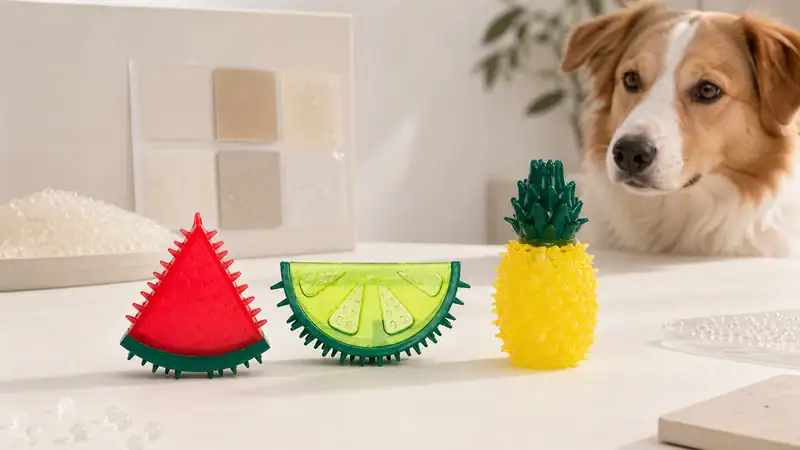
TPR is often selected for flexible injection molding, bright colors and commercially efficient toy collections. Natural rubber is frequently considered for resilient chew and fetch designs with a substantial tactile feel. Silicone is commonly used for flexible enrichment products, lick mats and applications where temperature tolerance or easy cleaning is important.
These are broad tendencies, not guarantees. Compound formulation and product design strongly influence final performance.
TPR for flexible commercial product ranges
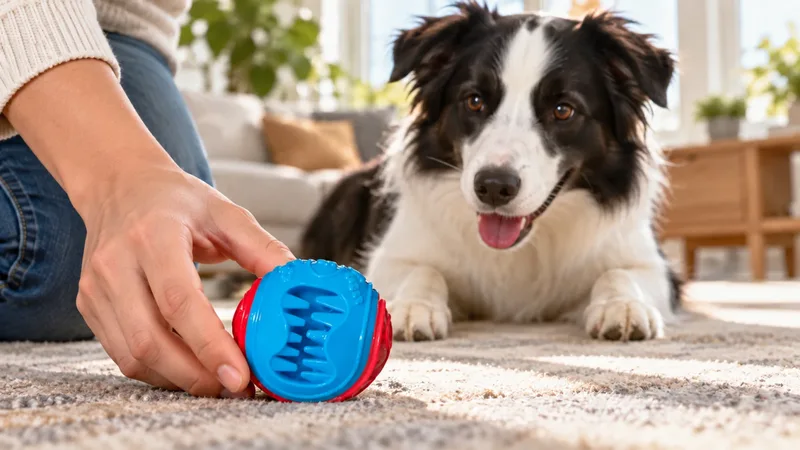
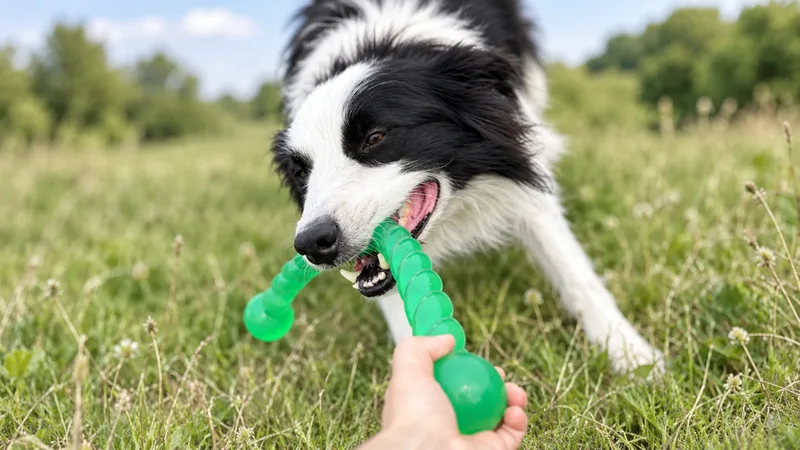
Thermoplastic rubber, or TPR, combines rubber-like flexibility with thermoplastic processing. It can be injection molded into detailed shapes and is available in a broad range of hardness levels and colors. This makes it useful for balls and fetch toys, squeeze toys, treat-dispensing products, softer components and products combined with hard plastic or textile elements.
TPR can support coordinated collections because brands can develop several colors and shapes using related processes. It may also be suitable for overmolding, depending on the substrate and formulation.
The limitation is that “TPR” does not identify one performance level. Two TPR compounds can differ substantially in hardness, tear behavior, odor, recovery and surface feel. Wall thickness, openings and local stress points also affect durability. A TPR toy designed for interactive play should not automatically be promoted for aggressive chewing.
A useful RFQ should state the desired hardness range, intended interaction, color, odor expectation, cleaning method, potential food contact, pet size and test requirements.
Natural rubber for resilience and tactile value
Natural rubber offers elasticity, recovery and a familiar substantial feel. It is often considered for chew toys, balls and treat-dispensing products where bounce, grip or resilience are important. It can also support a premium material story when the claim is accurate and documented.
Natural rubber requires careful compound and process control. Pigment, curing conditions, odor, surface bloom and batch consistency can influence the finished product. Color matching may also behave differently from plastic or silicone because the base compound and curing process affect appearance.
The word “natural” should not be treated as proof of safety, sustainability or regulatory compliance. If a brand wants to make claims about material origin, environmental impact or restricted substances, it should request supporting documentation and review the wording for the destination market.
For a private-label program, ask how the selected compound will be controlled from sample approval through mass production. Retaining an approved material and finished-product sample helps manage consistency.
Silicone for flexible enrichment and cleaning applications
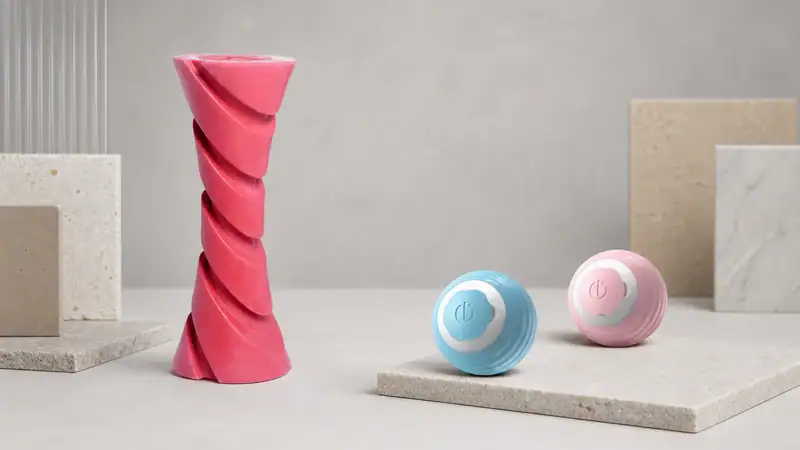
Silicone is widely recognized for flexibility, smooth feel and temperature tolerance. In pet products, it is often used for lick mats, treat molds, feeding-related enrichment products and flexible toy components. It can support freezer, hot-water or dishwasher-related use cases when the exact product and component have been designed and validated for those conditions.
Silicone may carry a higher material or processing cost than many TPR options. It can require different tooling, molding cycles and decoration methods. Bonding silicone to other materials also needs careful design.
A silicone component’s properties do not automatically apply to the entire product. A silicone body may tolerate hot water, while an attached printed decoration, adhesive, textile part or electronic component may not. Cleaning and temperature statements should specify whether they apply to the complete toy or only a removable component.
Why geometry matters as much as material
Material data alone cannot predict real-world durability. Toys often fail at thin bridges, treat openings, squeaker cavities, rope interfaces, seams or decorative attachments. These local features concentrate stress. HEOU’s guide to testing squeakers, ropes and small parts explains why component-level evaluation must accompany material selection.
Prototype the finished geometry and test it according to intended use. Depending on the design, the evaluation may include bite interaction, pulling, dropping, flexing, washing, odor, aging and visual wear. The goal is not to prove that a material is universally indestructible; it is to verify that the particular construction is suitable for the intended product position and claim.
No pet toy should be described as indestructible without a defensible basis. Packaging should also include appropriate supervision and replacement guidance for damaged toys.
Five questions that guide material selection
Before choosing between TPR, natural rubber and silicone, answer:
- What must the toy do: chew, bounce, float, dispense, freeze, lick or support interactive play?
- Which pet size and use intensity will the product target?
- Is the design one-piece, overmolded or multi-material?
- What cleaning and temperature statements will appear on the packaging?
- Which markets and retailers will require testing or material documentation?
These questions allow the manufacturer to recommend a construction rather than quote three materials without meaningful context.
Cost and tooling considerations
Unit cost should be evaluated together with tooling, cycle time, assembly, decoration and quality requirements. A lower resin price does not always produce a lower total product cost. A multi-material toy may add molding steps or assembly. A complicated geometry may increase scrap or inspection effort. Buyers can use the custom pet toy cost breakdown to structure this comparison beyond raw-material price.
Share target retail price and forecast volume early. This helps the development team balance material performance, mold investment and commercial positioning.
Material documentation and claims
Ask for documentation applicable to the exact formulation, component and intended market. Requirements can differ by country, retailer and product use. A test report for a similar item does not automatically cover a changed pigment, supplier or construction.
Avoid blanket language such as “non-toxic,” “food-grade” or “eco-friendly” unless the claim has a clear definition and support. Product copy should accurately describe the material and validated use without implying more than the evidence demonstrates.
For additional construction references, compare rope and tug toys with molded chew, fetch and puzzle formats. The pet product development process explains how a selected material and geometry move through design, sampling and production.
Choose the Material Before You Commit to Tooling
The most efficient time to solve material questions is before the mold is cut. Contact HEOU with your product reference, target function, market, price position and forecast quantity. Our OEM/ODM team can help discuss a material and construction route for your private-label pet toy program.
What to send in your RFQ
Provide a reference image or drawing, intended function, pet size, chewing profile, preferred hardness, color plan, cleaning statement, target market, packaging claim list, target price and forecast quantity. If you are uncertain about material, explain the performance you need instead of selecting one solely from a competitor listing.
Frequently asked questions
Which material is best for aggressive chewers?
There is no universal answer. Natural rubber is often considered for resilient chew designs, but compound, geometry, dimensions and intended claim all require finished-product validation.
Is silicone automatically safer than TPR?
No. A material name alone is not a compliance conclusion. The exact formulation, intended use and destination-market requirements must be considered.
Can all three materials match one Pantone color?
They can be developed toward a coordinated palette, but substrate and finish may cause visible differences. Approve physical samples for each material.