Bringing a new pet toy to the market is an exciting journey. Whether you are expanding an existing pet brand or launching a brand new startup, creating a custom toy sets you apart from the competition. However, when you finally sit down to plan, the biggest question is always the same: How much is this actually going to cost?
At Heoupet, we work with businesses every day to turn their ideas into physical products. We know that pricing in manufacturing can sometimes feel like a mystery. To help you budget effectively and avoid surprises, let’s break down the four main costs involved in manufacturing a custom pet toy: design, molds, materials, and packaging.
1. The Design and Prototyping Cost
Every great pet toy starts as an idea, but factories cannot manufacture a toy from a concept alone. We need exact specifications.
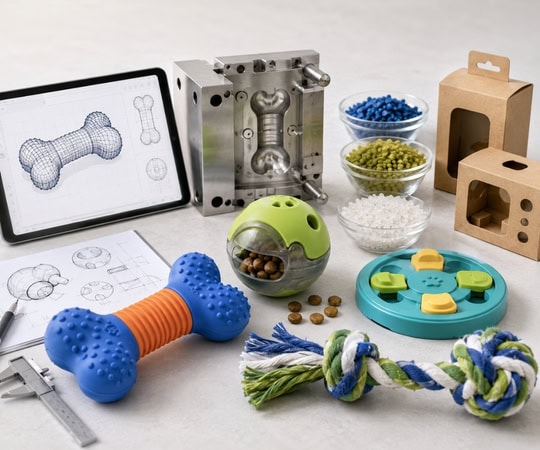
The design phase is where your idea is translated into a 3D model and a physical prototype. The cost here depends entirely on where you are in the process and how complex your toy is.
- If you already have 3D files: Your design costs will be very low or even zero. You have already done the heavy lifting, and our engineers just need to review the files to ensure they are ready for mass production.
- If you only have a sketch or idea: You will need to work with our design team to create 3D CAD files. Creating these digital blueprints requires time and expertise.
- Complexity matters: A simple, solid rubber ball will cost much less to design than a complex treat-dispensing puzzle toy with multiple moving parts.
Once the digital design is finished, a physical prototype is usually 3D printed. This allows you to hold the toy, test its size, and make sure it looks right before you commit to the big manufacturing steps. Prototyping is a small fee, but it is the best money you will spend to prevent expensive mistakes later.
2. The Mold (Tooling) Cost
For most hard or rubber pet toys, the mold is the largest upfront expense you will face.
If your toy is made of TPR (Thermoplastic Rubber), silicone, or hard plastic, it needs to be injection-molded. To do this, a factory has to cut a custom block of steel or aluminum into the exact negative shape of your toy. Liquid material is then forced into this metal block to create your product.
Here is what impacts the cost of your mold:
- Material of the mold: Steel molds cost more upfront than aluminum ones, but they last much longer. If you plan to order hundreds of thousands of toys over the years, a steel mold is the better investment.
- Size and cavities: A mold for a large dog chew toy costs more than a mold for a tiny cat ball. Additionally, a mold can have multiple “cavities” (meaning it can create four or eight toys in a single press). More cavities mean a higher upfront mold cost, but it dramatically lowers your cost per unit during production.
- Surface finishes: If you want your toy to have a complex texture—like a realistic bone grain or a specific pattern for cleaning a dog’s teeth—adding those details to the metal mold requires extra time and precision, which increases the price.
The good news about molds: This is a one-time setup cost. Once you pay for the mold, it belongs to your project. When you come back to Heoupet to reorder a second or third batch, you do not have to pay the mold fee again.
3. The Material Cost
Once the design is locked and the mold is made, you need to pay for the actual material used to make the toys. The material cost makes up the bulk of your “per-unit” price.
The pet industry is leaning heavily toward durability and safety, and the materials you choose will directly affect your bottom line.
- Standard Plastics and TPR: These are the most common and cost-effective materials for pet toys. TPR is highly versatile, bouncy, and affordable, making it a favorite for standard chew toys and balls.
- Premium Materials: Natural rubber, food-grade silicone, and heavy-duty nylon (for aggressive chewers) are more expensive raw materials. If you are building a premium brand targeting pet owners who want the toughest or most eco-friendly toys on the market, your material costs will be higher.
- Plush and Fabric: If you are making plush toys, your costs will depend on the fabric type, the stuffing (standard polyfill vs. crinkle paper or squeakers), and the amount of manual sewing required. Extra-tough reinforced seams will cost slightly more in labor and materials.
Volume is key here: The material cost is heavily tied to your Minimum Order Quantity (MOQ). Buying raw materials in massive bulk is cheaper. An order of 10,000 toys will always have a significantly lower per-unit material cost than an order of 1,000 toys.
4. The Packaging Cost
A great toy needs great packaging to sell. Packaging protects your product during international shipping and serves as your primary marketing tool on a retail shelf or an e-commerce store.
Packaging costs are incredibly flexible based on your budget:
- The Budget Option: A simple polybag with a printed barcode sticker is the cheapest route. This is often perfectly fine for e-commerce sellers who don’t need fancy shelf appeal.
- The Middle Ground: A custom-printed cardboard header card attached to the toy with a zip tie, or a branded belly band wrapping around the product. This offers great branding at a very reasonable price.
- The Premium Option: Full-color, custom-shaped blister packs or thick, eco-friendly window boxes. These protect the product beautifully and look amazing on retail shelves, but they are the most expensive packaging choice.
Just like materials, packaging becomes much cheaper per unit when you order in larger volumes.
Putting It All Together
Creating a custom pet toy requires a solid initial investment, mostly due to design and mold creation. However, once those hurdles are cleared, the actual cost to produce each toy drops significantly.
When you partner with a manufacturer, transparency is everything. At Heoupet, we believe you should know exactly where your budget is going. We work directly with our B2B partners to balance design complexity, material choices, and packaging options to hit their target price without sacrificing the safety and quality that pets deserve.
Ready to bring your custom pet toy idea to life? Reach out to the Heoupet team today, and let’s start building a custom quote for your next big product.