A self-cleaning pet brush offers a clear retail benefit: after brushing, the user presses a button or moves a slider to release collected hair. The feature is easy to demonstrate in product videos and can help a private-label grooming line stand out.
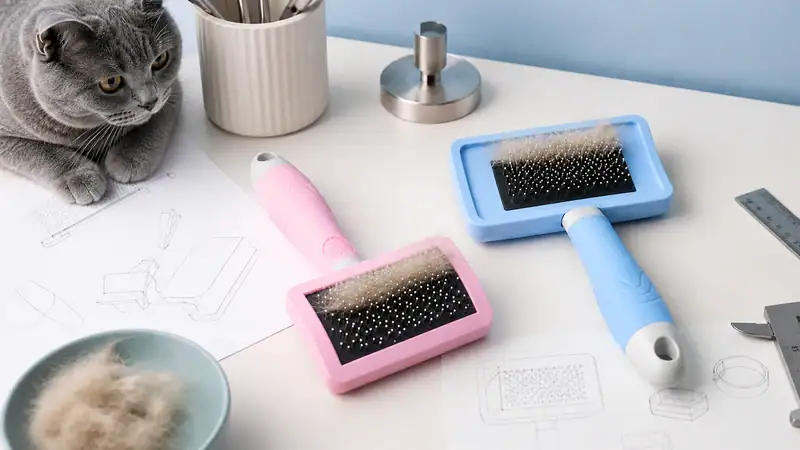
For buyers, however, the product must be evaluated as a moving mechanical system. A visually attractive brush can still create returns if the cleaning plate sticks, pins bend, hair catches inside the mechanism or the button feels weak. Buyers should also consider intellectual-property risk before requesting a design that resembles a competitor’s product.
How a self-cleaning brush works
Many self-cleaning slicker brushes combine four functional elements:
- A pin bed or pin plate that contacts the coat
- A cleaning or ejector plate positioned around the pins
- A button, slider or lever that moves the plate
- A spring, track or linkage that returns the mechanism
During grooming, the pins extend beyond the cleaning plate and collect loose hair. When the user activates the mechanism, the plate moves toward the pin tips and pushes the collected hair forward. The hair can then be removed as a layer rather than pulled from individual pins.
The mechanism appears simple, but its performance depends on tolerances. Plate holes must align with the pins. Clearance must allow movement without excessive wobble. Button travel and spring force must feel deliberate. Internal tracks must resist hair and debris.
Pin design and grooming performance
The pins are central to both function and user experience. Buyers should define pin material, diameter, length, density, angle and tip treatment. A longer pin may reach through a thicker coat, while a smaller or softer arrangement may suit more sensitive use. Product positioning should match the intended coat type and grooming task.
Pin retention is also important. Repeated brushing, cleaning and mechanism operation can apply stress. Samples should be checked for loose, bent or recessed pins after durability evaluation.
A self-cleaning function does not make every brush appropriate for every coat. Packaging should describe the intended use accurately and avoid universal performance claims that the product has not demonstrated.
Cleaning plate and button design
The cleaning plate should move evenly and release hair without requiring excessive force. If the holes are too tight, pins may scrape or bind. If they are too loose, the plate may feel unstable or allow hair into the mechanism.
Button ergonomics influence perceived quality. Test whether users can activate it with one hand, whether it can be pressed accidentally during brushing and whether it returns completely. A locking position may improve demonstration or storage, but adds components and failure points.
The handle should be evaluated together with the mechanism. Grip angle, head weight and button position determine whether the brush is comfortable for repeated use.
Customization options for private-label buyers
A custom self-cleaning pet brush can be differentiated through:
- Head shape and size
- Pin length, density and layout
- Handle geometry
- Soft-grip overmolding
- Button shape and color
- Color blocking
- Logo printing, embossing or molded branding
- Storage hole or hanging feature
- Packaging and accessory set
- Replacement or removable components
Some changes can be made to an existing platform, while others require new tooling. Buyers should ask which parts are standard, which can use interchangeable inserts and which require a fully new mold. This distinction affects MOQ, development cost and launch timing.
For logo options, HEOU’s pet product logo methods guide explains printing, embossing and molded branding.
Functional testing before production
Do not approve the brush from a rendering alone. Request functional samples and test with representative coat types. The broader pre-production sample evaluation checklist can help buyers document the approved configuration. A practical validation plan may include:
- Repeated button or slider cycles
- Hair-release effectiveness
- Return action after repeated use
- Pin retention and alignment
- Plate movement after exposure to hair and debris
- Handle and head drop testing
- Overmold or coating adhesion
- Logo wear
- Cleaning and drying
- Packaging transport simulation
Cycle targets should reflect product positioning and risk. The inspection standard should define what counts as complete return, acceptable button force and unacceptable pin damage.
Retain a golden sample after approval. If tooling or internal components are changed, confirm whether functional revalidation is needed.
Patent and design-right considerations
“Self-cleaning” describes a general function; it does not establish that a particular mechanism is free to manufacture or sell. Patent rights are territorial and claims may cover specific mechanical arrangements. Registered designs or design patents may protect ornamental appearance.
A product being widely available in the market does not prove that it is free from intellectual-property risk. A supplier holding its own patent also does not automatically resolve the brand owner’s freedom-to-operate position in every destination country.
Practical due diligence includes:
- Documenting the product concept and reference sources
- Asking the supplier to identify proprietary elements and available supporting information
- Avoiding instructions to copy a competitor product
- Reviewing target sales countries
- Engaging qualified IP counsel where commercial risk warrants it
- Defining ownership of custom tooling, CAD, artwork and development outputs in contracts
This article provides procurement guidance, not a legal opinion. Patent clearance should be handled by qualified professionals.
Packaging and merchandising considerations
The self-cleaning action is highly demonstrable. Packaging can use a simple three-step illustration: brush, press and remove hair. E-commerce listings can show the mechanism with close-up video. Claims should remain specific, such as “push-button hair release,” rather than promising effortless performance for every coat type.
Include cleaning instructions and appropriate grooming guidance. If the brush has protected tips, a removable cover or another special feature, show it clearly. Packaging should not obscure which element is genuinely customized.
What to send in your RFQ
Provide target pet and coat type, desired brush head size, pin preference, mechanism reference, handle style, color palette, logo method, packaging concept, target market, target price, forecast quantity and any required functional tests.
If using a competitor reference, mark the functional characteristics you want to improve rather than requesting an exact copy. This gives the design team room to create a differentiated solution.
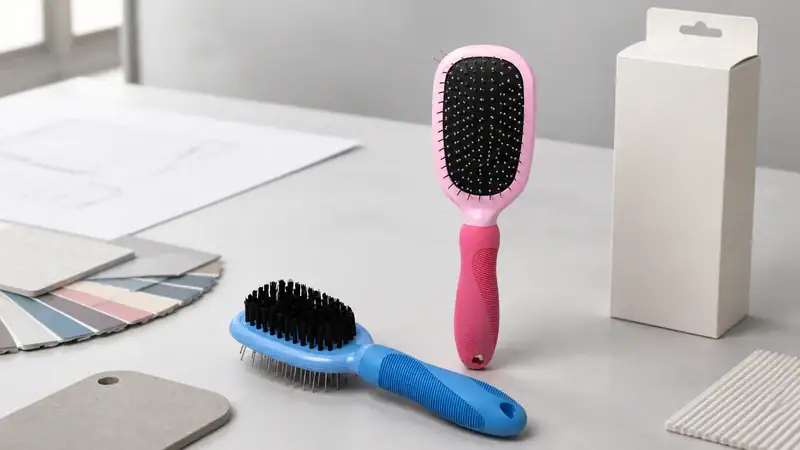
Explore HEOU’s grooming and bathing range for brushes, combs and related tools. Buyers comparing platforms can also review a double-sided grooming brush before deciding whether an existing structure or new mechanism is required. New structures should follow a controlled pet product development process.
Develop a Brush Customers Can Understand with HEOU
A good self-cleaning brush combines visible function, comfortable grooming and reliable mechanics. Contact HEOU with your reference images, coat target, pin preference, customization list and forecast volume. Our OEM/ODM team can discuss an existing-platform modification or a new product-development route.
Frequently asked questions
What should be tested on a self-cleaning brush?
Test repeated actuation, hair release, return action, pin retention, plate alignment, cleaning access, handle durability and performance on representative coat types.
Can I add my logo to an existing brush?
Often yes, subject to supplier capability and commercial terms. Confirm whether the change is decoration only or requires tooling, and define artwork and tooling ownership.
Does a factory patent guarantee freedom to sell worldwide?
No. Rights and risks can differ by country and by the exact product configuration. Obtain qualified IP advice for your target markets when appropriate.