Your logo turns a standard product into a recognizable branded product. But the best decoration method for a plush toy may fail on flexible rubber, and a molded logo that lasts for years may require tooling that does not suit a small trial order.
Choosing a logo method requires more than comparing appearance. You also need to consider material, surface shape, flexibility, abrasion, cleaning, order quantity, color count, tooling, and target cost.
This guide compares common logo printing and branding methods for custom pet products so you can select the right option before sampling.
Quick Comparison
| Method | Suitable surfaces | Color potential | Durability | Tooling/setup |
| Pad printing | Small curved or irregular areas | Low to medium | Medium, material-dependent | Low to medium |
| Screen printing | Flat or gently curved areas | Low to medium | Medium, material-dependent | Low to medium |
| Heat transfer | Fabrics and selected coated surfaces | High | Medium | Low to medium |
| Embroidery | Textile panels | Medium to high | High | Digitizing/setup |
| Laser marking | Metal and selected rigid plastics | Usually low | High | Fixture/program setup |
| Emboss/deboss | Molded or formable materials | Usually one material color | High | Tooling may be required |
| Molded-in logo | Rubber, TPR, TPE, silicone, plastic | Low to medium | Very high | Mold/tooling required |
Need help choosing a durable logo method for your private-label pet product? Contact HEOU and share your product material, artwork, quantity, and target finish for a customization review.
Start With the Product Material
The substrate determines which methods are feasible.
Common pet product materials include:
- Natural rubber
- TPR and TPE
- Silicone
- PP, ABS, nylon, and other plastics
- Stainless steel
- Polyester and nylon webbing
- Cotton or synthetic rope
- Plush and woven fabrics
- Coated fabrics
- Paper and packaging board
Even materials with the same general name can behave differently because of hardness, additives, texture, coating, and surface energy. Always test the selected decoration on the actual production material and color.
1. Pad Printing
Pad printing transfers ink from an etched plate to the product using a flexible silicone pad. It is widely used on plastic, rubber, and other small three-dimensional products.
Best for:
- Small logos
- Curved or irregular surfaces
- One or a few colors
- Plastic and suitable rubber-like materials
Advantages:
- Good detail on small artwork
- Works on shapes that are difficult to screen print
- Relatively efficient for repeat production
- Can support multi-color designs with proper registration
Limitations:
- Print area is usually limited
- Deep textures reduce definition
- Flexible products can stress the ink layer
- Adhesion and abrasion resistance vary by material
- Additional fixtures or surface treatment may be required
Test pad-printed logos for tape adhesion, rubbing, flexing, saliva or water exposure, and the cleaning method stated in the instructions.
2. Screen Printing
Screen printing pushes ink through a mesh stencil onto the product. It works best on flat or gently curved surfaces and can produce solid, visible color.
Best for:
- Flat fabric panels
- Bags and mats
- Broad plastic or rubber surfaces
- Simple, bold logos
Advantages:
- Strong color coverage
- Suitable for larger print areas
- Cost-effective for repeat quantities
- Wide choice of compatible ink systems
Limitations:
- Less suitable for complex curves or interrupted textures
- Each color usually needs a separate screen and process
- Fine registration can be challenging on flexible products
- Thick ink areas may crack when repeatedly folded or stretched
Screen printing is often a good choice when the product offers a dedicated flat branding area.
3. Heat Transfer and Transfer Printing
Heat transfer applies a printed design using heat and pressure. The exact process and transfer film vary by fabric or substrate.
Best for:
- Multi-color graphics
- Detailed artwork
- Fabric accessories and selected coated surfaces
- Smaller runs needing more visual complexity
Advantages:
- Supports gradients and detailed designs
- Consistent graphic appearance
- Can be practical for designs with several colors
Limitations:
- Heat can deform or mark some materials
- Edges may lift after flexing or washing
- The transferred layer can change the surface feel
- Not ideal for every coating or textured surface
Approve a washed and aged sample, not only a freshly transferred piece.
4. Embroidery and Woven Labels
For plush toys, beds, carriers, and textile accessories, embroidery or a sewn woven label can provide a premium, durable identity.
Embroidery advantages:
- Premium appearance
- Strong color and texture
- Good durability on suitable fabric
Embroidery limitations:
- Dense stitching can stiffen soft material
- The backing and thread ends must be controlled
- Fine artwork may need simplification
- Placement can affect seams, comfort, or product shape
Woven label advantages:
- Detailed, repeatable branding
- Easy to standardize across several textile products
- Can include care or traceability information
Woven label limitations:
- A protruding label may be chewed or pulled
- Edge finish and attachment must be evaluated
- Placement should not create an unwanted loop or weak point
For pet toys, label attachment and accessibility should be included in the mechanical test plan.
5. Laser Marking or Engraving
Laser marking changes or removes the surface to create a permanent graphic. It is often used on metal and selected plastics.
Best for:
- Stainless steel bowls
- Metal tags or components
- Selected rigid plastics
- Serial numbers or traceability codes
Advantages:
- No printed ink layer to peel
- Precise and durable
- Useful for variable data
- Clean, premium appearance
Limitations:
- Usually limited in color
- Contrast depends on the material and finish
- Curved surfaces require suitable equipment and fixtures
- The marking area and cycle time affect cost
Run trials on the exact surface finish. Brushed, polished, coated, and painted metal can produce different results.
6. Embossed and Debossed Logos
An embossed logo is raised above the surrounding surface. A debossed logo is recessed into it. These effects can be created in a mold or through a forming process, depending on the material.
Best for:
- Rubber, TPR, TPE, and silicone products
- Leather-like or flexible accessories
- Plastic parts
- Minimal, premium branding
Advantages:
- No separate ink is required
- Durable through repeated handling
- Integrates naturally with the product
- Can add texture and a premium feel
Limitations:
- Low contrast when no color fill is used
- Fine details may be lost
- Deep recesses can collect dirt or be harder to clean
- Tooling changes may be required
- The logo can affect grip or comfort if poorly positioned
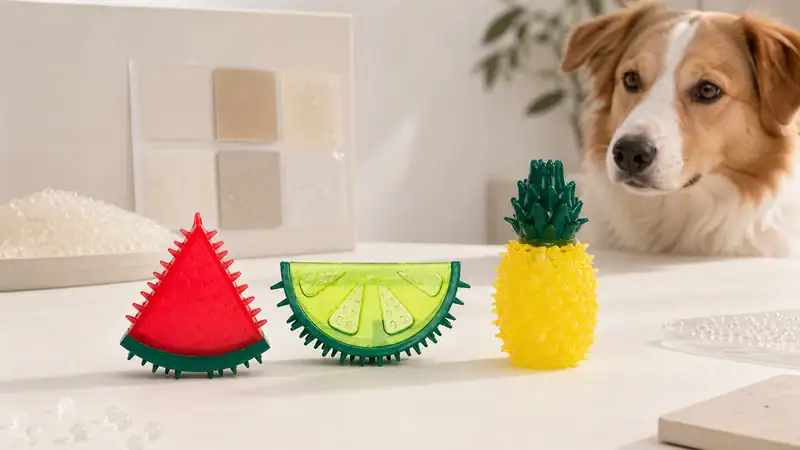
On a chew toy, rounded geometry is generally easier to mold and maintain than thin, sharp logo details. The manufacturer should review draft angles, depth, parting lines, and material flow.
7. Molded-In Logos
A molded-in logo is formed as part of the product during injection, compression, or another molding process. It can be raised, recessed, or created using multiple materials or colors when the tooling and process support it.
Best for:
- Custom rubber and TPR toys
- Plastic feeders and grooming tools
- High-repeat OEM/ODM products
- Brands prioritizing long-term logo durability
Advantages:
- Logo is integral to the product
- Very durable
- No post-printing operation for a single-material logo
- Consistent placement
- Suitable for repeated production
Limitations:
- Requires logo details in the tooling
- Artwork changes can require mold modification
- Fine details depend on material and molding process
- Multi-color molded logos add process and tooling complexity
- Not always economical for an early low-volume validation order
Molded logos work best when branding is considered during product design rather than added after the mold is complete.
Learn more about HEOU’s logo customization for custom pet toys.
8. Logo Plates, Badges, and Separate Components
Metal plates, rubber badges, plastic emblems, and sewn patches can create strong visual differentiation.
They also add a new component and attachment point. Evaluate:
- Pull and torque resistance
- Sharp edges
- Corrosion
- Adhesive or fastener durability
- Accessibility to the pet
- Effect on washing and comfort
- Potential fragments after failure
For products intended for chewing, a separate decorative badge may not be the most practical choice unless the design and attachment are specifically engineered and tested for that use.
How to Choose the Right Logo Method
Use these questions during development:
What is the product made from?
Confirm the exact material, hardness, texture, coating, and flexibility.
Is the surface flat, curved, soft, or textured?
Pad printing handles some curves; screen printing prefers flatter areas; molding works with three-dimensional geometry; embroidery needs a suitable textile panel.
How will the product be used and cleaned?
A logo on a chew toy, washable plush product, outdoor travel bowl, and decorative storage item will face different stresses.
How many colors and how much detail are required?
Simplifying fine lines or reducing colors can improve repeatability and lower cost.
What is the expected order quantity?
Printing or transfer methods may suit lower initial quantities. Molded logos become more attractive when tooling is already required and the design will repeat across larger orders.
Could the logo affect safety or function?
Avoid sharp details, dirt traps, weak sections, uncomfortable surfaces, and easily detached decorations.